Discover why enduro mountain biking is one of the healthiest outdoor sports. Backed by scientific research, this article explores how riding improves cardiovascular fitness, builds full-body strength, sharpens mental focus, burns calories, and enhances overall well-being while combining adventure with long-term health benefits.
Mountain biking has always been celebrated for its adrenaline, breathtaking scenery, and technical challenge. Yet beneath the jumps, rocky descents, and muddy climbs lies something far more significant: one of the most complete forms of exercise available. Modern sports science increasingly suggests that enduro mountain biking is more than a recreational activity—it is a full-body workout that strengthens the heart, sharpens the mind, builds functional muscle, and supports long-term mental wellbeing.
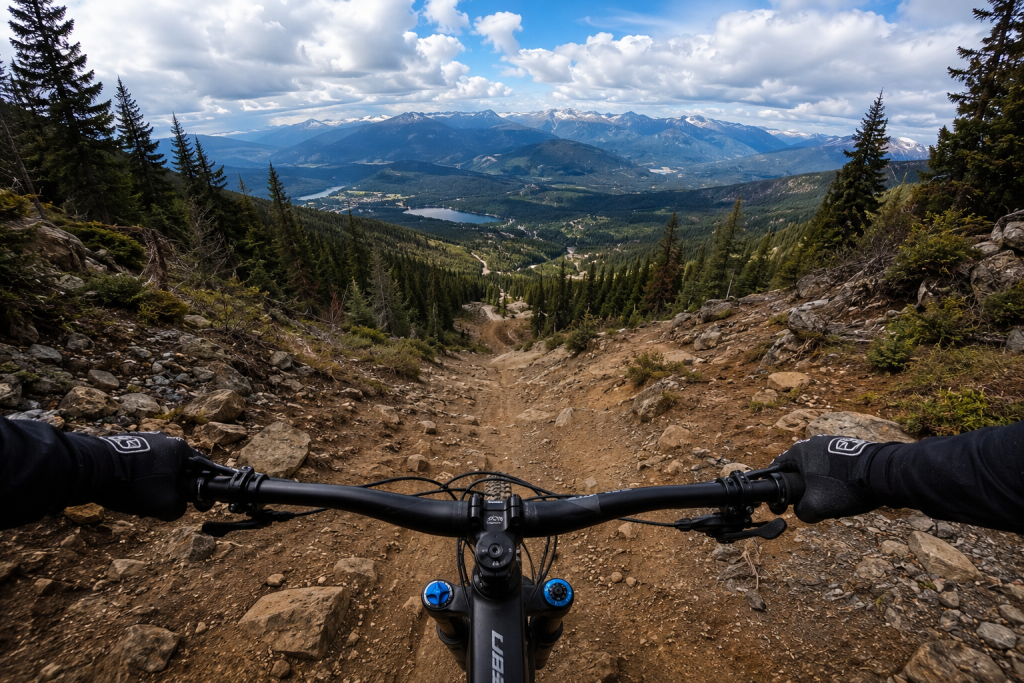
Unlike traditional gym sessions that isolate specific muscle groups or focus on a single aspect of fitness, enduro riding constantly demands adaptation. Riders climb steep fire roads at a sustained aerobic pace before transitioning into fast, technical descents that require explosive power, balance, and split-second decision-making. This continuous shift between endurance and high-intensity effort creates a training stimulus that few other sports can replicate.
One of the greatest health benefits of enduro riding is its effect on cardiovascular fitness. During a typical ride, heart rate fluctuates dramatically as riders tackle climbs, recover briefly on descents, and accelerate through technical trail sections. Exercise scientists describe this pattern as similar to high-intensity interval training (HIIT), a form of exercise widely recognized for improving aerobic capacity, metabolic health, and cardiovascular function. Research published in Frontiers in Sports and Active Living also highlights cycling as an effective activity for improving overall physical fitness while reducing the risk of chronic disease.
While improved heart health is an expected outcome of regular cycling, many riders underestimate just how physically demanding enduro can be. Energy expenditure varies according to rider weight, terrain, and intensity, but studies consistently show that mountain biking burns substantially more calories than walking and often exceeds the demands of steady road cycling.
Activity
Estimated Calories Burned per Hour*
Walking
250–350 kcal
Road Cycling
450–700 kcal
Trail Mountain Biking
600–900 kcal
Enduro Mountain Biking
700–1,100 kcal
Approximate values for a 70–80 kg adult. Actual energy expenditure varies depending on terrain, rider fitness, weather, and riding intensity.
This sustained energy demand helps explain why mountain biking is frequently recommended for improving body composition and supporting healthy weight management. Unlike repetitive indoor cardio, every climb and descent presents a new challenge, making long rides feel engaging rather than monotonous.
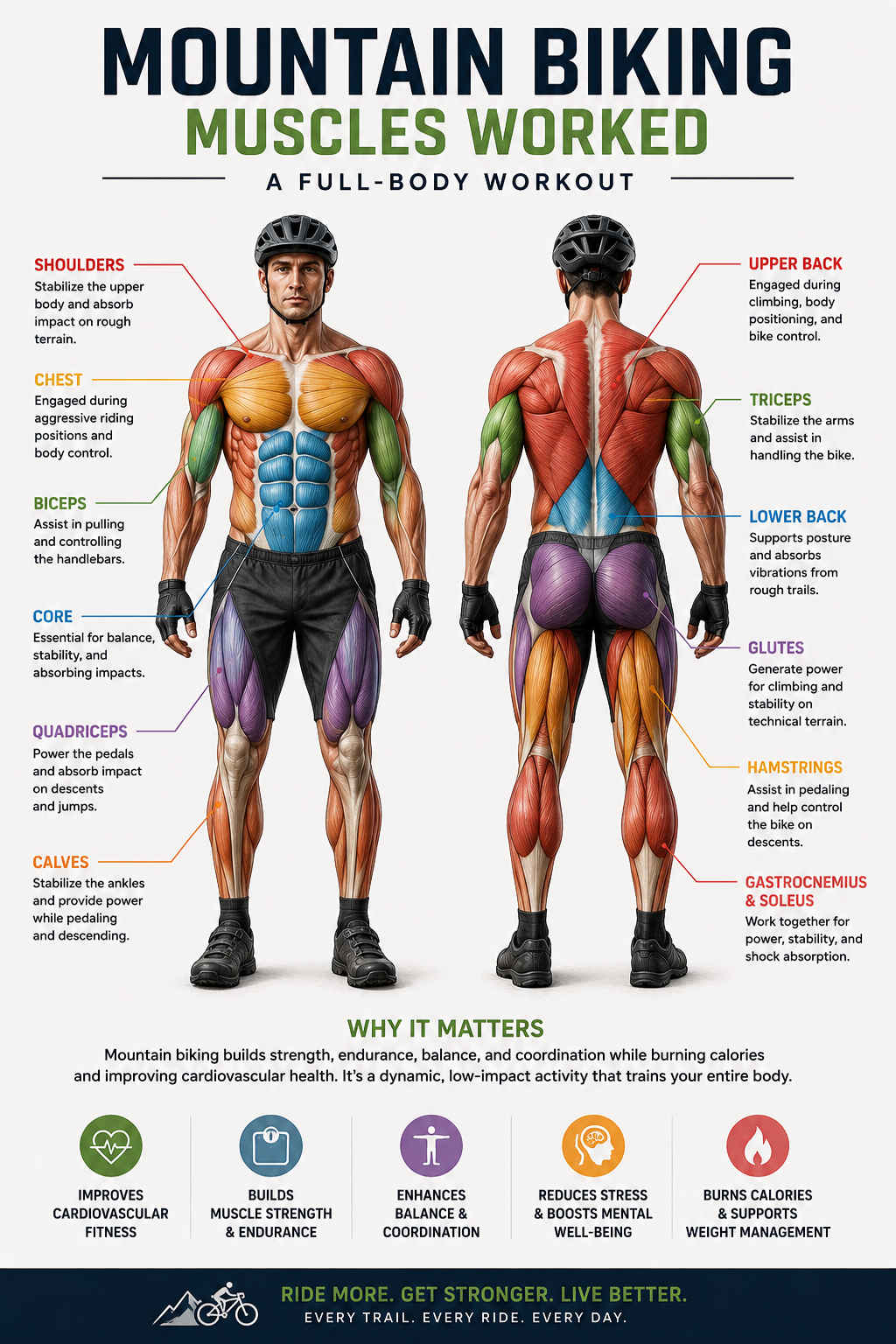
Beyond cardiovascular fitness, enduro riding develops strength in ways many riders never notice. Every technical descent requires the body to function as an integrated system. The legs absorb repeated impacts while the core stabilizes the torso against uneven terrain. The shoulders, forearms, and upper back work continuously to maintain control through rock gardens, berms, and drops. Rather than isolating muscles, mountain biking builds what sports scientists refer to as functional strength—the ability to produce force while maintaining stability during complex movement.
Perhaps even more remarkable is the effect mountain biking has on the brain. Riding technical trails demands constant attention as the rider scans for obstacles, predicts traction, selects the fastest line, and adjusts body position in fractions of a second. These repeated cognitive challenges engage areas of the brain responsible for decision-making, reaction time, spatial awareness, and motor coordination. Many experienced riders describe entering a "flow state," a psychological condition characterized by complete immersion in the task at hand. Researchers have linked this state to improved mood, reduced stress, and greater overall life satisfaction.
Nature itself also plays an important role. A recent large-scale study involving more than 264,000 participants found that outdoor physical activity performed in greener environments was associated with greater reductions in anxiety and depression than similar activity performed elsewhere. While the research examined outdoor exercise broadly rather than mountain biking specifically, it reinforces what many riders already know from experience: spending hours on forest trails offers benefits that extend well beyond physical fitness.
The combination of exercise and nature may explain why mountain bikers often report lower stress levels after a ride, even when physically exhausted. Instead of viewing exercise as an obligation, riders are motivated by exploration, skill progression, and the simple enjoyment of being outdoors. This intrinsic motivation increases the likelihood of maintaining an active lifestyle over many years, one of the strongest predictors of long-term health.
None of this means enduro riding is without risk. Falls, collisions, and overuse injuries remain real concerns, particularly on advanced terrain. Wearing appropriate protective equipment, maintaining the bicycle properly, progressing skills gradually, and respecting personal limits are essential for reducing injury risk. When practiced responsibly, however, the health benefits of mountain biking appear to substantially outweigh its risks.
Enduro mountain biking is often marketed as an extreme sport, but the science tells a different story. It combines endurance training, interval exercise, strength development, balance, coordination, cognitive engagement, and exposure to nature into a single activity. Few sports challenge so many physiological systems simultaneously while remaining as enjoyable and rewarding.
Perhaps that is the greatest secret of mountain biking. Riders rarely return to the trail because they are chasing better cholesterol levels or lower blood pressure. They return because the experience is fun. Improved fitness, better mental health, and a stronger body become the natural rewards of doing something they genuinely love.
References
Frontiers in Sports and Active Living. The health benefits of cycling: a review of current evidence. 2026.
National Library of Medicine (PMC). Health benefits associated with cycling and active transportation. 2023.
Large-scale study on outdoor physical activity and mental wellbeing (2026 preprint).
World Health Organization. Physical Activity Guidelines.
American College of Sports Medicine. ACSM's Guidelines for Exercise Testing and Prescription.
Editor's Note: Estimated calorie expenditure values are based on published exercise physiology data for adults weighing approximately 70–80 kg. Actual values vary according to rider weight, terrain, environmental conditions, and riding intensity.
Jerwin Mtb is a mountain biking content creator and gear analyst behind Elev8MTB. Graduate at Kaplan Business School Sydney Australia in Masters Research. As a hobby in mountain biking he has hands-on experience in downhill and trail riding, he focuses on bike technology, real-world performance testing, and industry insights across the Philippines and Australia as part of his research.
Buying your first mountain bike can feel overwhelming, especially with so many styles, components, and price ranges available today. This beginner’s guide breaks down everything you need to know—from hardtails and full suspension bikes to geometry, suspension, and wheel sizes—to help you choose the right MTB for your riding style and budget.