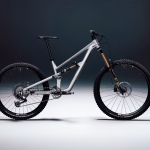
The Frameworks 2026 Downhill Bike brings refined race-focused geometry, updated frame construction, and adjustable suspension kinematics into a World Cup-ready package. Built with a 6061 aluminum front triangle, carbon rear end, and progressive suspension design, this latest evolution focuses on stability, confidence, and high-speed downhill performance.
Bike Reviews
The Frameworks 2026 Downhill Bike represents a refined evolution of one of the most talked-about race-focused downhill platforms in recent years. Built with direct feedback from World Cup racing and continuous development, the latest version focuses less on radical redesign and more on improving frame quality, suspension consistency, geometry scaling, and overall ride confidence.
This is not a downhill bike built around trends or marketing hype. Instead, it’s a machine developed with one clear goal: maximum downhill performance at race speed.
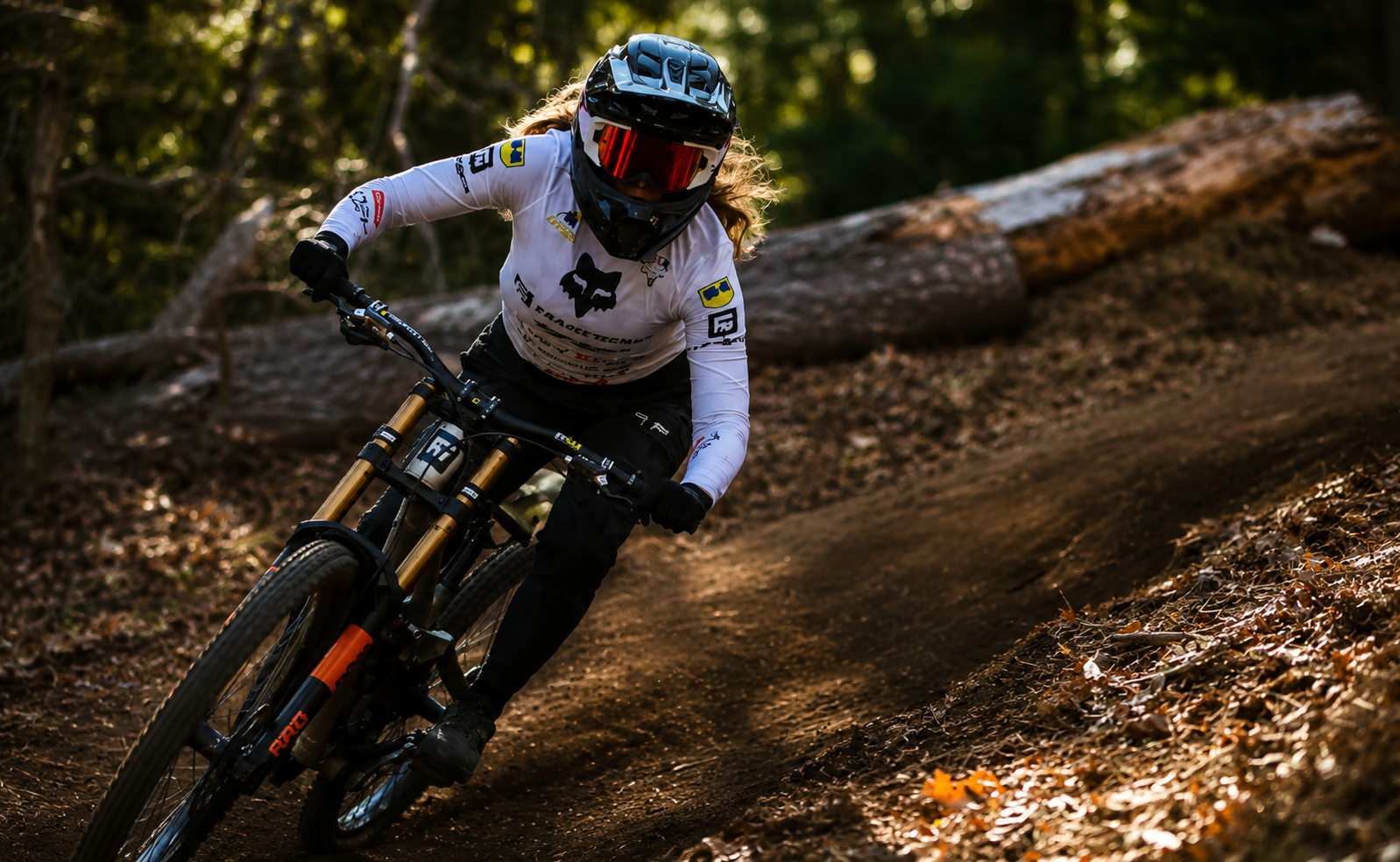
The 2026 production bike, showcased through Anna Newkirk’s race setup, continues Frameworks’ philosophy of combining aluminum strength, carbon efficiency, and highly refined kinematics into a platform designed specifically for aggressive downhill riding.
Expanded Sizing: A Better Fit for More Riders
One of the biggest updates for 2026 is the expansion of the size range.
Frameworks now offers:
Small
Medium
Large
Extra Large
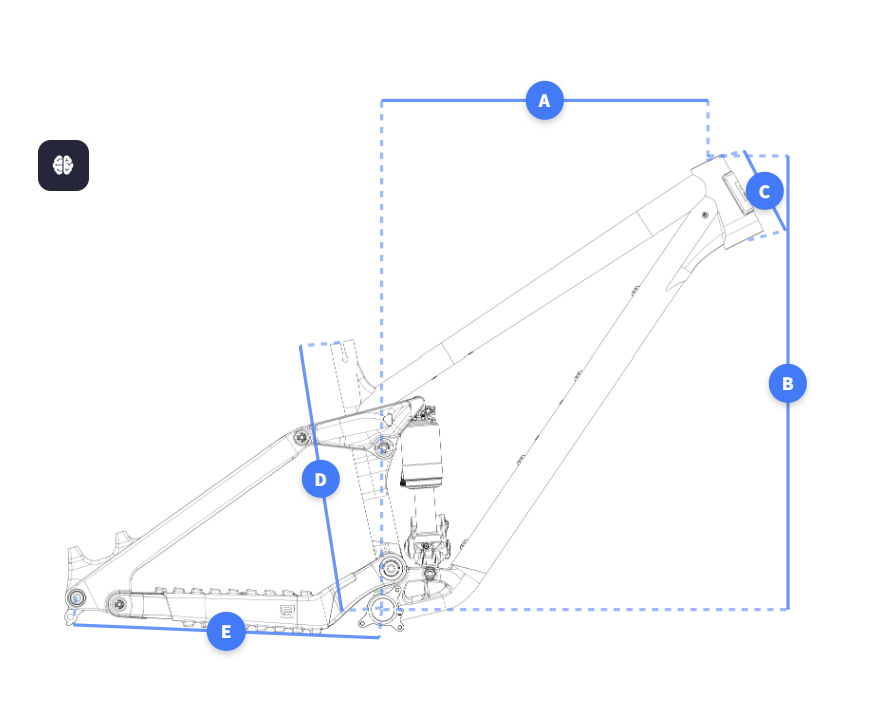
Unlike many brands that simply stretch front-center dimensions, Frameworks scaled both the front and rear of the bike proportionally.
Small
Medium
Large
Extra Large
AReach
440mm
460mm
480mm
500mm
BStack
650.5mm
650.5mm
663.9mm
677.4mm
CHead Tube Length
115mm
115mm
130mm
145mm
D Seat Tube Length
365mm
380mm
400mm
420mm
EChainstay Length
445mm
450mm
455mm
460mm
Travel Front
170mm
170mm
170mm
170mm
Travel Rear
172mm
172mm
172mm
172mm
Head Tube Angle
63.75°
63.75°
63.75°
63.75°
BB Height
340mm
340mm
340mm
340mm
BB Drop
37mm
37mm
37mm
37mm
Virtual Seat Tube Angle
78.5°
79°
79.5°
80°
Actual Seat Tube Angle
74.2°
76°
77.55°
78.6°
Seat Tube Offset
48.5mm
36.5mm
25.5mm
19.5mm
Seat Height Reference
650mm
700mm
750mm
800mm
Wheelbase
1236.2mm
1261.3mm
1292.9mm
1324.5mm
Trail
136.9mm
136.9mm
136.9mm
136.9mm
Fork Length
587.7mm
587.7mm
587.7mm
587.7mm
Fork Offset
44mm
44mm
44mm
44mm
Headset Length
3mm
3mm
3mm
3mm
Wheel OD (Rear / Front)
715 / 754
715 / 754
715 / 754
715 / 754
Standover
741.3mm
741.4mm
743.9mm
746.4mm
Max Seat Post Insertion
251mm
272mm
290mm
308mm
Rider Height
160 - 172cm
170 - 182cm
180 - 192cm
188 - 200cm
This proportional scaling is a major detail because it helps preserve the bike’s handling characteristics across all frame sizes.
Many downhill bikes feel balanced only in one specific size. Frameworks clearly wanted every rider to experience the same stability and confidence regardless of height.
Geometry Focused on Stability and Confidence
The Frameworks DH bike continues with:
A 63° head angle
Low bottom bracket
Tall stack height
According to the Frameworks team, the philosophy behind the geometry is simple: Put the rider low, stable, and centered in rough terrain.
The bike uses:
342mm bottom bracket height
Long wheelbase
Tall front end
This setup creates: ✔ Stability at speed ✔ Improved control in steep terrain ✔ Confidence in rough sections
The low dynamic ride feel is especially important in modern World Cup downhill tracks, where riders are constantly dealing with high-speed compressions, braking bumps, and steep technical terrain.
Suspension Design: Refined Instead of Reinvented
Frameworks continues to use the same four-bar suspension platform developed over the past few seasons.
Rather than changing the entire system, the brand refined:
Leverage curves
Progression settings
Suspension consistency
The result is a bike that prioritizes predictability and rider confidence.
Adjustable Progression Settings
One of the standout features is the adjustable leverage ratio.
The bike offers:
30% progression
32% progression
34% progression
Most Progressive Setting:
Starts at 3.55:1 and ends at 2.25:1.
More Linear Setting:
Starts at 3.35:1 and ends at 2.25:1.
What this means on trail:
More progressive = better bottom-out resistance
More linear = more support and responsiveness on smoother tracks
The adjustment process is surprisingly simple: Remove the lower shock bolt and switch positions in seconds.
This gives racers flexibility depending on terrain and track style.
Anti-Rise and Pedaling Characteristics
Frameworks paid close attention to anti-rise and anti-squat behavior.
Anti-Rise:
Around 75% through most of the travel.
This helps the bike: ✔ Stay active under braking ✔ Reduce excessive pitch ✔ Maintain traction during steep descents
Meanwhile, the bike runs relatively high anti-squat values around sprinting zones, helping the bike feel supportive during standing acceleration.
Combined with the O-chain setup:
Chain noise is reduced
Pedal kickback is minimized
Drivetrain feel becomes quieter and smoother
Frame Construction: Aluminum Meets Carbon
Frameworks continues its hybrid frame concept:
6061 aluminum front triangle
Carbon fiber chainstay and seatstay
7075 CNC-machined linkage
For 2026, the company moved manufacturing to Genio in Taiwan, one of the most respected aluminum manufacturers in the industry.
Because of the stronger tubing construction, Frameworks removed several external gussets previously used around the head tube.
This improves:
Frame aesthetics
Structural efficiency
Weld stress distribution
Hydroformed Seat Tube and Precision BB Design
Another major update is the hydroformed seat tube.
This allows:
Strategic wall thickness placement
Improved strength where needed
Lower standover clearance
The new bottom bracket section also uses a two-piece clamshell design, later machined for extremely accurate pivot alignment.
This precision helps: ✔ Improve suspension movement ✔ Reduce friction ✔ Maintain long-term frame alignment
Carbon Rear End: Reduced Unsprung Weight
Frameworks continues using carbon chainstays and seatstays developed with VIP Composites.
Advantages include:
Reduced unsprung weight
Better suspension sensitivity
Accurate pivot alignment
This helps the rear wheel react faster to impacts while maintaining traction.
Finishing Details and Protection
The bike includes:
Brushed and clear-coated finish
Custom downtube protector
Molded chainstay protector
Integrated cable protection
Frameworks also includes premium small components such as:
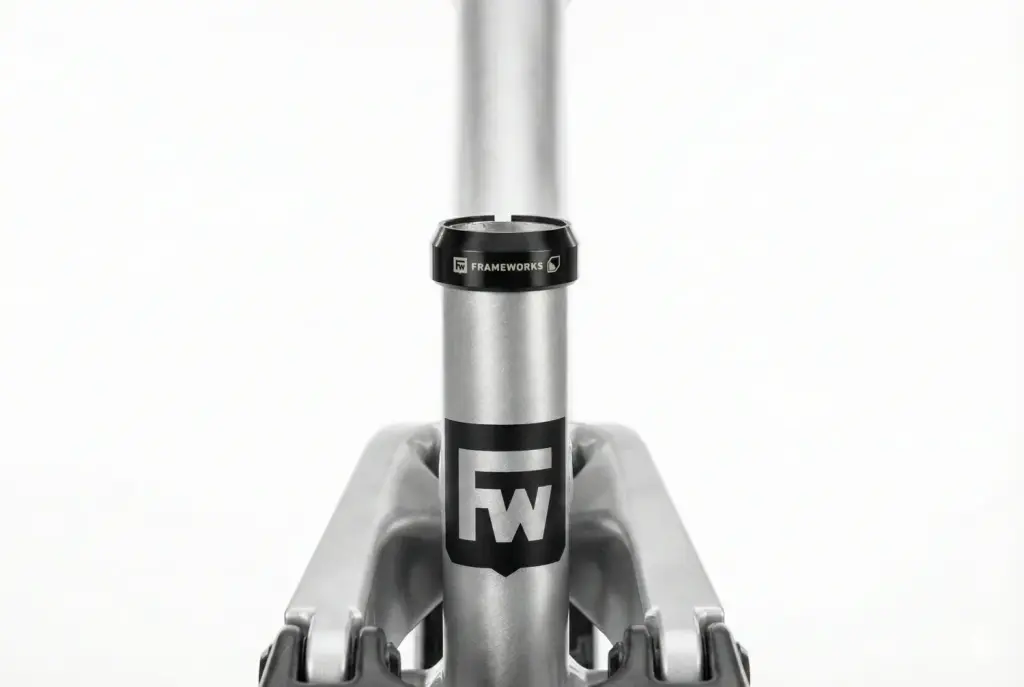
Burgtec seatpost clamp
Burgtec rear axle
UDH compatibility
These details reinforce the bike’s premium race-focused identity.
Real-World Ride Character
Everything about the Frameworks DH bike points toward: 👉 High-speed confidence.
This is not a playful jib-focused bike.
Instead, it feels designed for:
Stability
Predictability
Precision at race pace
The long wheelbase, low center of gravity, and refined suspension all contribute to a bike that should excel on steep and rough World Cup-style terrain.
❌ Not focused on casual riders ❌ Aggressive geometry may feel demanding for beginners ❌ Premium-level pricing expected
The Frameworks 2026 Downhill Bike is a highly refined race machine that focuses on what matters most: 👉 stability, suspension consistency, and rider confidence.
Instead of chasing trends, Frameworks doubled down on proven downhill fundamentals and improved nearly every detail around them.
For riders looking for a serious downhill platform capable of handling modern World Cup terrain, this bike looks extremely promising.
Frameworks may still be a relatively young brand compared to major manufacturers, but the 2026 bike shows clear maturity in design and engineering.
This is a downhill bike built by racers—for racers.
And judging by the level of refinement here, Frameworks is becoming a serious name in the gravity racing world.
Jerwin Mtb is a mountain biking content creator and gear analyst behind Elev8MTB. Graduate at Kaplan Business School Sydney Australia in Masters Research. As a hobby in mountain biking he has hands-on experience in downhill and trail riding, he focuses on bike technology, real-world performance testing, and industry insights across the Philippines and Australia as part of his research.
The Canyon Torque AL 8 combines aluminum durability, modern geometry, and long-travel capability into a gravity-focused platform built for bike parks, jumps, and aggressive mountain riding.
The Hope Pro 5 is one of the most respected premium MTB hubs in the world, known for its loud signature sound, fast engagement, excellent durability, and smooth performance. Built in the UK and trusted by enduro and downhill riders, it delivers reliable power transfer, strong sealing against mud and rain, and a premium feel that makes any bike stand out on the trail.
The Specialized S-Works Demo 11 costs around ₱650,000–₱700,000+ because it’s built for elite downhill racing. It features advanced technologies like the HighGear drivetrain and OBB suspension, a premium carbon frame, and top-tier components. Designed for maximum speed, control, and durability on extreme terrain, it delivers performance far beyond typical mountain bikes.